 samplerz.com
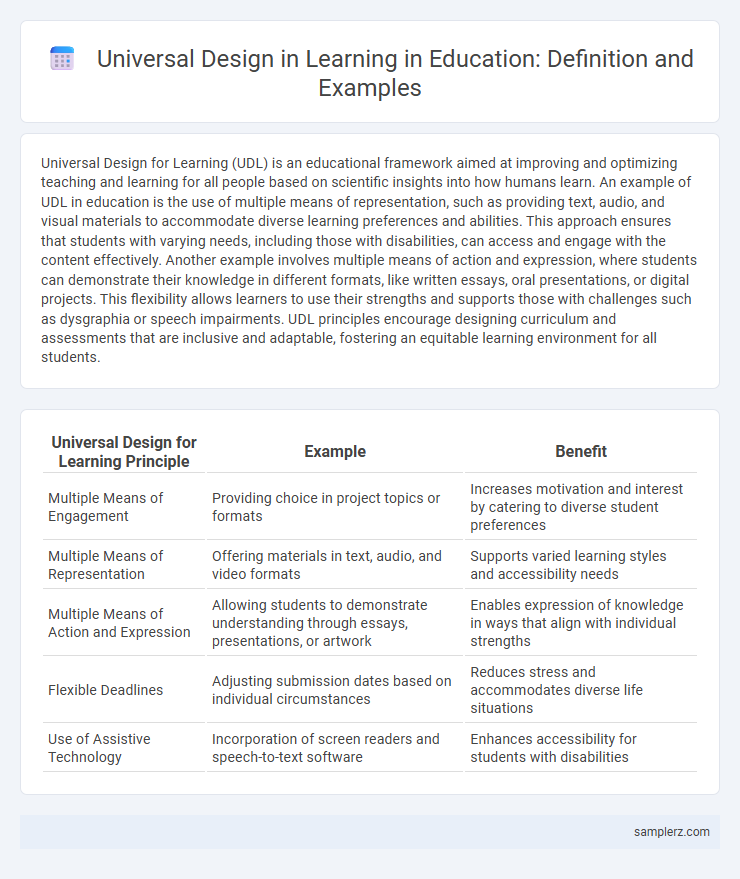
 Universal Design for Learning (UDL) is an educational framework aimed at improving and optimizing teaching and learning for all people based on scientific insights into how humans learn. An example of UDL in education is the use of multiple means of representation, such as providing text, audio, and visual materials to accommodate diverse learning preferences and abilities. This approach ensures that students with varying needs, including those with disabilities, can access and engage with the content effectively. Another example involves multiple means of action and expression, where students can demonstrate their knowledge in different formats, like written essays, oral presentations, or digital projects. This flexibility allows learners to use their strengths and supports those with challenges such as dysgraphia or speech impairments. UDL principles encourage designing curriculum and assessments that are inclusive and adaptable, fostering an equitable learning environment for all students.
Table of Comparison
| Universal Design for Learning Principle | Example | Benefit |
|---|---|---|
| Multiple Means of Engagement | Providing choice in project topics or formats | Increases motivation and interest by catering to diverse student preferences |
| Multiple Means of Representation | Offering materials in text, audio, and video formats | Supports varied learning styles and accessibility needs |
| Multiple Means of Action and Expression | Allowing students to demonstrate understanding through essays, presentations, or artwork | Enables expression of knowledge in ways that align with individual strengths |
| Flexible Deadlines | Adjusting submission dates based on individual circumstances | Reduces stress and accommodates diverse life situations |
| Use of Assistive Technology | Incorporation of screen readers and speech-to-text software | Enhances accessibility for students with disabilities |
Introduction to Universal Design in Learning
Universal Design for Learning (UDL) emphasizes flexible learning environments that accommodate diverse learner needs by integrating multiple means of representation, engagement, and expression. An example includes offering digital textbooks with adjustable text sizes, audio narration, and interactive quizzes to support varied learning preferences. This approach enhances accessibility and promotes equal opportunities for all students to succeed.
Key Principles of Universal Design for Learning
Universal Design for Learning (UDL) emphasizes multiple means of engagement, representation, and action and expression to accommodate diverse learners. Providing options such as adjustable text sizes, multimedia content, and varied assessment types exemplifies these key principles. This approach enhances accessibility and promotes inclusive education by addressing learner variability effectively.
Flexible Classroom Layouts for All Learners
Flexible classroom layouts incorporate adjustable furniture and versatile seating arrangements to support diverse learning styles and physical needs. This design fosters engagement by allowing easy reconfiguration for group work, individual study, or sensory breaks, accommodating students with various abilities. Implementing flexible environments aligns with Universal Design for Learning (UDL) principles, promoting inclusion and equal access to education.
Multiple Means of Representing Course Content
Universal Design for Learning (UDL) emphasizes providing Multiple Means of Representing course content to cater to diverse learner needs, such as using text, audio, and visual materials simultaneously. This approach includes incorporating captions for videos, offering descriptive text for images, and using interactive simulations to enhance comprehension. By presenting information in varied formats, educators improve accessibility and support deeper understanding for all students.
Varied Assessment Methods to Accommodate Diversity
Universal Design for Learning (UDL) incorporates varied assessment methods such as multiple-choice tests, oral presentations, and project-based evaluations to accommodate diverse learning styles and abilities. These assessment variations ensure all students, including those with disabilities, can demonstrate their knowledge effectively. Implementing flexible assessments supports equity and inclusivity by addressing individual strengths and challenges in the educational environment.
Technology Integration for Inclusive Education
Universal Design for Learning (UDL) integrates technology like screen readers, speech-to-text software, and interactive digital textbooks to support diverse learning needs. These technologies enable students with disabilities to access and engage with educational content alongside their peers, promoting inclusivity in the classroom. Adaptive tools such as customizable interfaces and real-time feedback systems enhance participation and comprehension for all learners.
Case Study: UDL in a Science Classroom
In a science classroom implementing Universal Design for Learning (UDL), educators provide multiple means of representation by using videos, diagrams, and interactive simulations to explain complex concepts such as ecosystems and chemical reactions. Students engage through varied methods including hands-on experiments, group discussions, and digital labs, accommodating diverse learning styles and abilities. Assessment options include traditional tests, oral presentations, and project-based evaluations, ensuring equitable opportunities for all learners to demonstrate understanding.
Teacher Collaboration in UDL Implementation
Teacher collaboration in Universal Design for Learning (UDL) implementation enhances inclusive education by integrating diverse teaching strategies tailored to all learners' needs. Collaborative planning allows educators to share expertise, develop flexible curricula, and utilize multiple means of representation, engagement, and expression. Schools that prioritize team-based UDL practices report improved student accessibility, engagement, and academic outcomes.
Addressing Barriers with UDL Strategies
Universal Design for Learning (UDL) strategies effectively address barriers by providing multiple means of representation, expression, and engagement tailored to diverse learning needs. For instance, offering text-to-speech technology supports students with reading difficulties, while flexible assignment formats accommodate different communication strengths. These approaches ensure all learners can access content and demonstrate understanding, promoting inclusive education environments.
Future Trends in Universal Design for Learning
Future trends in Universal Design for Learning (UDL) emphasize integrating advanced technology such as artificial intelligence and adaptive learning platforms to create personalized educational experiences. These innovations support diverse learners by providing multiple means of engagement, representation, and expression, aligning with UDL principles. Emerging practices also focus on accessibility enhancements through virtual and augmented reality, enabling immersive, inclusive learning environments.
example of universal design in learning Infographic