 samplerz.com
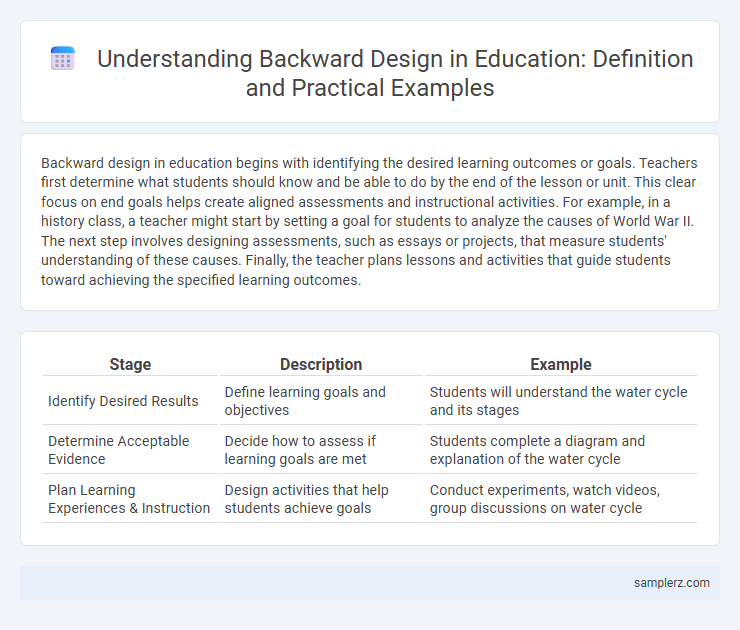
 Backward design in education begins with identifying the desired learning outcomes or goals. Teachers first determine what students should know and be able to do by the end of the lesson or unit. This clear focus on end goals helps create aligned assessments and instructional activities. For example, in a history class, a teacher might start by setting a goal for students to analyze the causes of World War II. The next step involves designing assessments, such as essays or projects, that measure students' understanding of these causes. Finally, the teacher plans lessons and activities that guide students toward achieving the specified learning outcomes.
Table of Comparison
| Stage | Description | Example |
|---|---|---|
| Identify Desired Results | Define learning goals and objectives | Students will understand the water cycle and its stages |
| Determine Acceptable Evidence | Decide how to assess if learning goals are met | Students complete a diagram and explanation of the water cycle |
| Plan Learning Experiences & Instruction | Design activities that help students achieve goals | Conduct experiments, watch videos, group discussions on water cycle |
Understanding Backward Design in Education
Backward design in education begins with identifying desired learning outcomes and assessments before planning instructional activities, ensuring alignment with curriculum goals. For example, a math teacher might first define mastery of quadratic equations, design assessments that test this skill, and then create lessons that build the necessary conceptual understanding and problem-solving techniques. This approach enhances targeted learning and promotes deeper comprehension by prioritizing end goals over content coverage.
Key Principles of the Backward Design Approach
The backward design approach begins with identifying desired learning outcomes and then determining acceptable evidence of student understanding through assessments. Key principles include clarifying learning goals, designing assessments aligned with those goals, and planning instructional activities that facilitate achievement of targeted results. This method ensures coherent curriculum development focused on meaningful student mastery and application.
Real-World Classroom Example of Backward Design
In a real-world classroom example of backward design, a middle school science teacher begins by identifying the desired learning outcome, such as students mastering the concept of ecosystems. The teacher then develops assessments that measure students' ability to analyze and explain ecosystem interactions before planning lessons that build the necessary skills and knowledge. This approach ensures all instructional activities directly support achieving the defined learning goals.
Setting Clear Learning Goals: A Backward Design Scenario
A teacher begins by identifying specific learning outcomes, such as mastering the water cycle concepts by the end of the unit. Assessments are then crafted to measure student understanding through projects and quizzes focused on these objectives. This backward design ensures all instructional activities directly support achieving the clearly defined goals.
Crafting Assessments with Backward Design in Mind
Crafting assessments with backward design in education involves starting with clear learning objectives and desired outcomes to ensure alignment throughout the instructional process. Educators develop assessment tools that directly measure mastery of specific skills and knowledge, guiding students toward targeted competencies. This approach improves instructional coherence and enhances student understanding by focusing on end goals from the outset.
Designing Instructional Activities through Backward Planning
Backward design in education emphasizes starting with clear learning goals, then designing assessments that align with those goals, and finally planning instructional activities to ensure students achieve desired outcomes. For example, a teacher aiming to develop critical thinking skills might first define specific evaluation criteria, create projects and tests that measure analytical abilities, and then design classroom discussions and exercises that promote critical analysis. This approach ensures instructional activities are purposefully aligned with assessment and learning objectives for maximum effectiveness.
Comparing Traditional Planning vs. Backward Design
Traditional planning often begins by selecting activities and assessments, leading to a fragmented curriculum, while backward design starts by identifying desired learning outcomes and then plans assessments and instructional strategies accordingly. In backward design, educators prioritize clear learning goals and ensure alignment between objectives, instruction, and evaluation, enhancing coherence and effectiveness. This approach results in targeted teaching that fosters deeper understanding and mastery compared to the more activity-driven traditional method.
Benefits Observed from Backward Design Implementation
Backward design implementation in education leads to enhanced student understanding by clearly aligning learning objectives with assessments and instructional activities. Teachers observe improved student engagement and higher retention rates as lesson plans emphasize essential skills and knowledge from the outset. This approach also facilitates targeted feedback and personalized learning pathways, resulting in measurable academic growth.
Overcoming Challenges in Applying Backward Design
Overcoming challenges in applying backward design in education often involves clarifying learning goals to align assessments and instructional activities effectively. Educators must address difficulties in identifying measurable outcomes and designing authentic assessments that truly reflect student understanding. Professional development and collaborative planning are essential strategies for successfully implementing backward design frameworks in curriculum development.
Best Practices for Teachers Using Backward Design
Teachers applying backward design first identify clear learning goals aligned with curriculum standards and assessments. They then plan instructional activities and materials that directly support those outcomes, ensuring effective knowledge transfer. Regular formative assessments throughout the process help educators adjust strategies to meet diverse student needs and achieve mastery.
example of backward in design Infographic